How to choose cuticle bits?
As we've mentioned many times, cuticle bits are among the most important tools. After all, proper preparation of the plate affects the durability of our manicure. So which cuticle bits should you choose for your work to bring the expected results? In today's post we'll take on this topic and break it down into its basics.
Each of us has surely had a wave of questions in our heads while shopping. Which cuticle bits will be best for my clients? Which cuticle bit will meet my expectations? Where can I find the best cuticle bits? And above all… How do I choose from so many options? Diamond, ceramic or sintered carbide, also called carbide? There are so many of them… Before we make a decision, it would be good to know how they differ from one another, right? So let's get to the knowledge in a nutshell!
Markings on bits
Before we move on to dividing bits into their types, we'll remind you about the markings you'll certainly come across while shopping and beyond. What do the individual colours mean? They tell you above all about the grit of our tools and hint at which type of cuticles or materials they're intended for. Today we'll consider them only in terms of working the folds.
- Yellow – the gentlest and finest grit. When we're dealing with really delicate cuticles, or want to mat the natural nail plate without hurting anyone, bits marked this way will be ideal. Intended above all for low-impact use or for very precise yet harmless movements.
- Red – also fine, working great for buffing and treating cuticles. It's with this colour marking that we'll find the most bits for the folds around the nail.
- Blue – medium grit, allowing a bit more intervention and recommended for more calloused, hard cuticles. This marking also appears in many combined manicure sets.
- Green – very coarse, definitely less recommended for working on cuticles, especially for beginners. It provides much less control over your actions. You'll most often find this marking on bits for removing product rather than for cuticles.
- Black – coarse, suitable for removing titanium manicure among others. Not available when it comes to cuticle bits.
Types of bits
Now that we've refreshed our memory of the marking colours and their specification, let's move on to the next point, in which we'll divide bits into their types.
Diamond bits
The main job of these bits is above all removing hybrid polish, gel or acrylic, shortening nails, working and smoothing the cuticles, and sanding or matting natural nails. Their gentleness means they're perfect for a combined manicure, as they give us incredible control in our actions.
Sintered carbide / carbide bits
Sintered carbide cuticle bits give us significantly greater possibilities than the previous ones. This is mainly due to their lack of tendency to heat up, which makes working with them more pleasant. Their structure – specifically the cross cuts – handles removing hybrid polish, gel and cuticles in a very short time. Just a few practised movements and the result is guaranteed. That doesn't change the fact that they must be handled with particular care.
Ceramic bits
It's commonly known that, thanks to being made of zirconium oxide, ceramic cuticle bits heat up less, just like carbide bits. In addition, they're very durable and resistant to mechanical damage. But what else is worth knowing about them? They work best for treating and removing gel and acrylic, as well as getting rid of overgrown cuticles and calluses. On the other hand, they're used far less during a combined manicure.
But what else is worth knowing about them? They work best for treating and removing gel and acrylic, as well as getting rid of overgrown cuticles and calluses. On the other hand, they're used far less during a combined manicure.
Bit shapes
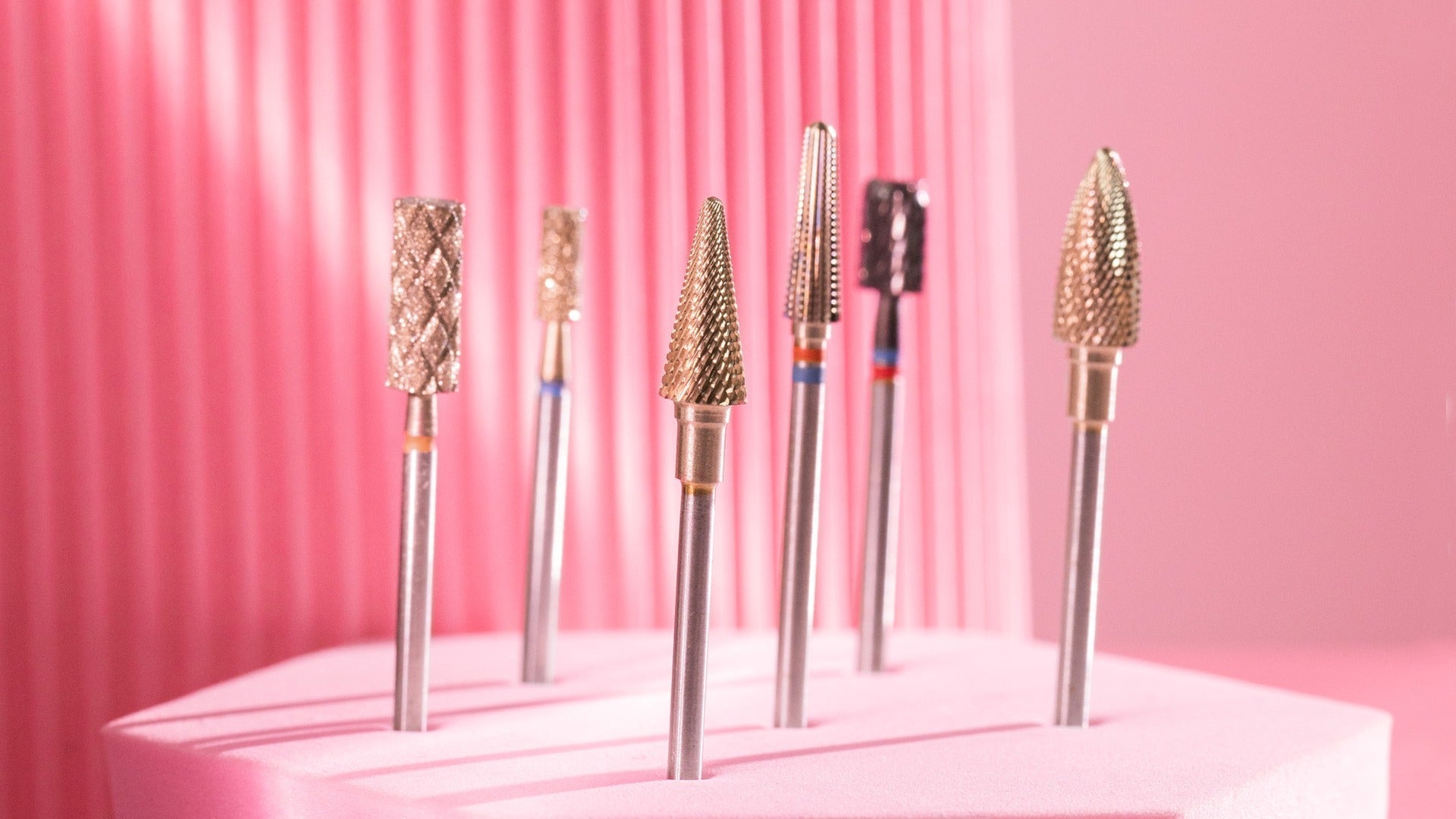
Each shape gives us completely different possibilities. That's exactly why it's so important to get to know them, because used in the right order they'll let us move quickly and easily through the cuticle-work stage.
- Cylinders and cones – this type of shape handles pushing back the cuticles and getting rid of the epidermis phenomenally.
- Flames – specialists in lifting and cleaning the folds.
- Balls – ideal for finishing the work, they remove calluses on the fingertips brilliantly.
Which bits to choose? The most universal will be sets with diamond bits, as they give us the greatest control over our actions; additionally their grit is fairly fine, so it'll be easy for us to achieve smoothed skin. It's hard to do harm with them. If, on the other hand, clients have somewhat more demanding calluses, it's good to try carbide and ceramic bits. They are, you could say, agents for special tasks.
Text author:
Natalia Kurkiewicz – ambassador of more than 5 beauty brands, nail technician, enthusiast of the perfect manicure, author of the profile @pazury_bez_cenzury_natalia.