Article: What do the coloured markings on bits mean?
What do the coloured markings on bits mean?
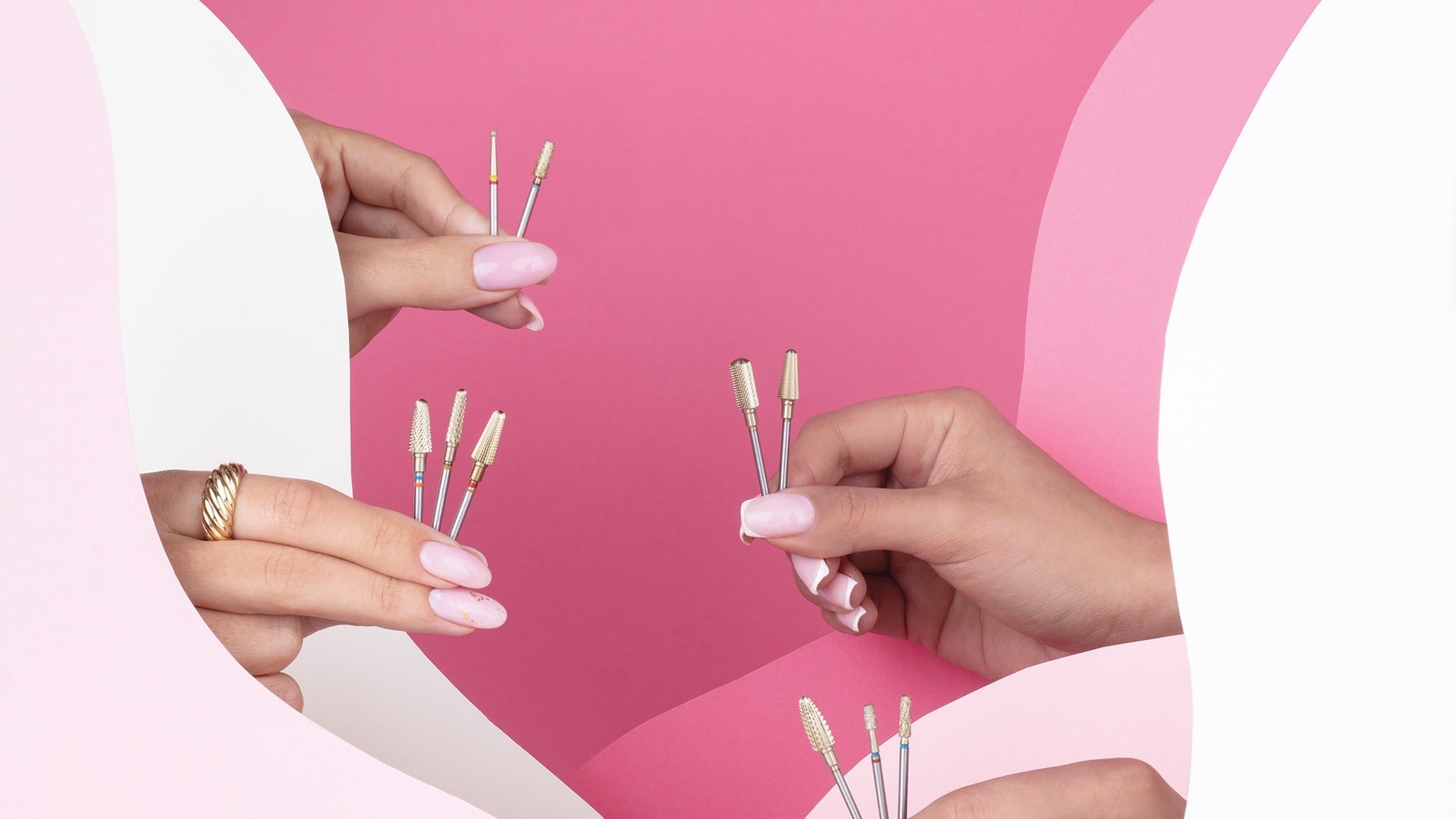
Coloured markings – what do they mean? They tell you above all about the grit of our tools and hint at which type of cuticles or materials they're intended for. Today we'll consider them only in terms of working the folds.
For more sensitive cuticles we use bits with a gentler grit (red band) and carbides with a yellow or red band, so that both the technician and the client can feel at ease during the manicure. Hard, more overgrown cuticles are more demanding, which is why bits with a coarser grit (blue and green bands) are intended for them.
Bit band colours and their grit
- Bits with a very fine grit (yellow band). Ideal for buffing the nail plate and cuticles. It beautifully brings shine to the surface, both with cuticle oil and without it.
- Bit with a fine grit (red band). We use it for gently working the cuticles and the natural plate. It mats the surface of the nail plate, preparing it for styling. It's essential in the technique of painting under the cuticles and cleaning the "pocket". It's the most frequently chosen bit by technicians just starting their adventure with the e-file manicure.
- Bit with a standard grit (blue band). We use it to push back, lift and remove cuticles – it's ideal for the first stage of cuticle work. The most popular choice among our technicians.
- Bit with a coarse grit (green band). We use it to work on hard skin and nails and to remove thickenings and corns. It works perfectly in podiatry.
- Bit with a very coarse grit (black band). We use it to quickly work on thickened nails and remove very hard skin. It works perfectly in podiatry.
And you, bit enthusiasts – which grit do you use most often?